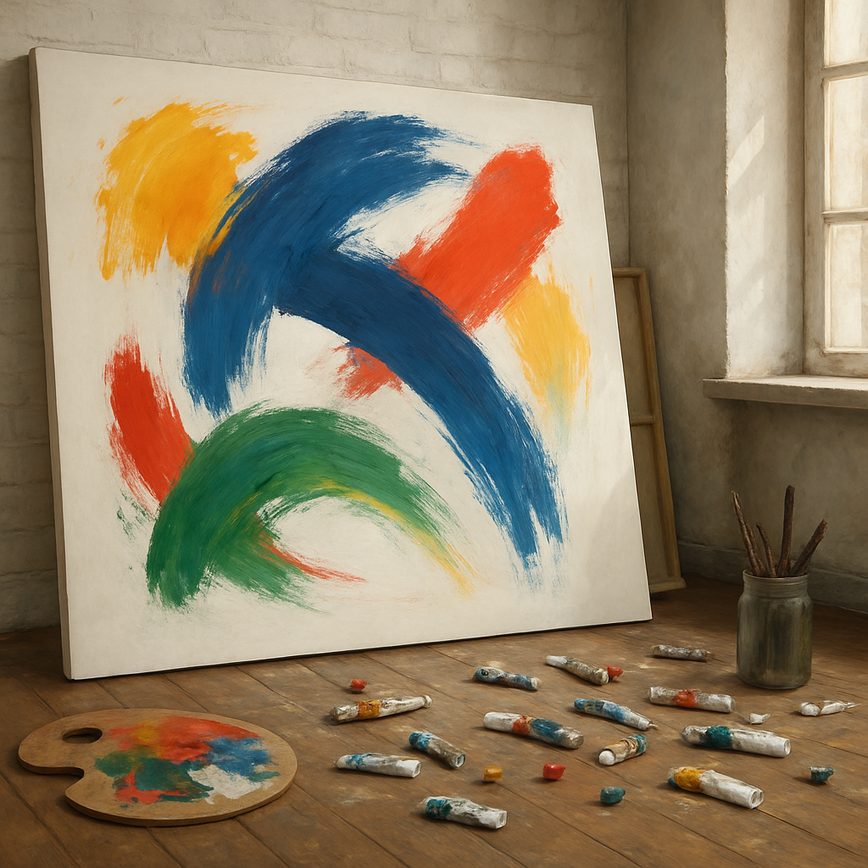
Introduction to Large Format Paintings
Large format paintings refer to artworks created on significantly larger canvases than typical paintings. These expansive artworks often begin at dimensions of around 48 inches by 60 inches and can extend to even grander sizes, sometimes spanning several feet in both height and width. The scale of these paintings allows for a commanding visual presence, making them ideal for displaying in spacious galleries, public spaces, or large private interiors.
The term “large format paintings” encapsulates a wide range of canvas dimensions, but the essential characteristic is their considerable size in comparison to standard artworks. Classic canvas sizes often range from small (12×16 inches) to medium (24×36 inches), whereas large format paintings transcend these by offering a much more immersive experience through their sheer size. Artists who work on large canvases utilize this opportunity to explore more intricate compositions, dramatic scales, and detailed storytelling within the artwork.
Artists choose to work on large format paintings for several reasons. Firstly, the large canvas serves as a bold platform, enabling an artist to express ideas and emotions on a grand scale. This format invites viewers to engage deeply with the art, often evoking stronger emotional responses due to the encompassing nature of the painting. Secondly, large canvases provide artists with the freedom to experiment with expansive brushstrokes, varied textures, and complex layering techniques that might be constrained in smaller formats.
Additionally, large format paintings often become focal points in any space due to their impressive size and presence. This makes them particularly appealing for public art installations and commercial settings, where a striking visual impact is desired. In residential settings, these paintings offer a unique way to personalize and elevate interior design, transforming walls into captivating narratives or abstract expressions.
In essence, large format paintings not only redefine the dimensions of traditional artwork but also expand the possibilities of creative expression. Their larger scale offers both artists and viewers an engaging and powerful art experience that smaller canvases cannot match. This overview of large format paintings highlights why this art size remains a popular and influential choice among artists and collectors alike.
Definition and Characteristics
Large format paintings are defined by their considerable size, often significantly exceeding that of typical smaller works. The scale of these paintings plays a crucial role in their impact, as they physically dominate the space they occupy, commanding attention and inviting viewers to experience the artwork up close and from a distance. This grand scale allows artists to incorporate intricate details that might be lost in smaller compositions, providing a richness and depth that enhances the viewer’s engagement.
The characteristics that distinguish large paintings include their ability to convey vast, immersive scenes or abstract expressions that smaller works may struggle to achieve effectively. The expansive surface allows for complex layering of colors, textures, and forms, adding to the painting’s visual complexity. Additionally, the sheer size amplifies the emotional and visual impact, often creating an overwhelming sense of presence that can evoke strong responses from the audience.
Moreover, the spatial interaction between viewer and painting is unique with large format works. Viewers might need to move physically to absorb different sections and appreciate the full composition, making the engagement more dynamic. In summary, the definition and characteristics of large format paintings revolve around their impressive scale, detailed craftsmanship, and powerful visual presence that set them apart from smaller art pieces.
Historical Context and Evolution
Large format paintings have a rich history that dates back to ancient times, playing a significant role in the evolution of art history. These expansive artworks became prominent during notable periods such as the Renaissance, Baroque, and Romantic eras, where artists harnessed large canvases to tell grand stories and evoke powerful emotions. The history of large paintings reveals their use in religious, political, and social contexts, often commissioned for churches, palaces, and public buildings to convey messages and demonstrate status.
During the Renaissance, the evolution of large paintings was marked by advances in technique and perspective, enabling artists like Leonardo da Vinci and Michelangelo to create monumental masterpieces. The Baroque period further emphasized drama and movement on a grand scale, with artists such as Caravaggio and Peter Paul Rubens pushing the boundaries of size and composition. In the 19th century, Romantic painters used large formats to express intense emotion and grandeur, reflecting the changing social landscape and artistic sensibilities.
Large paintings continue to evolve today, influenced by modern and contemporary art movements that reinterpret scale and impact. Understanding the history and evolution of large paintings enriches appreciation of their role in art history and their enduring allure across cultures and eras.
Techniques and Materials Used in Large Format Paintings
Creating large format paintings requires a combination of specialized painting techniques and materials to effectively manage the scale and ensure the durability and impact of the artwork. Artists working on large canvases must carefully select their brushes, paints, and support types to accommodate the size without compromising on detail or texture.
One of the first considerations for large format paintings is the support. Most artists use stretched canvases made from cotton or linen, as these materials offer a sturdy and flexible base to hold the paint. Linen is often preferred for its strength and fine texture, which can sustain extensive brushwork and layering. Additionally, some artists opt for plywood or masonite panels for added rigidity, especially when working indoors or requiring a portable support.
When it comes to painting techniques, the approach often differs from smaller works due to the expansive surface area. Artists commonly use broad, sweeping brushstrokes to cover large sections quickly and create dynamic effects. They might also employ roller brushes or palette knives for textural variety and speed. Layering techniques, like underpainting and glazing, remain essential but are adapted to suit the broader scale by working in sections and integrating wet-on-wet methods to blend seamlessly.
The choice of art supplies, particularly paints, is crucial for large canvases. Acrylic paints are favored for their fast drying times and versatility, allowing artists to build up layers efficiently. Oil paints, on the other hand, provide rich pigmentation and blending possibilities but require longer drying periods and care in application. Many artists select high-quality, heavy-body paints to maintain color intensity and prevent dilution over the expansive area. Using mediums can also enhance texture, gloss, or drying time depending on the desired effect.
Brush selection plays a significant role in handling large format paintings. Large, flat brushes are commonly used to cover broad areas, while round and filbert brushes assist with details and softer edges. The handles on these brushes are often longer than usual, giving artists greater reach and control without having to move excessively close to the canvas. Additionally, artists sometimes incorporate sponges, rags, or airbrush techniques for unique finishes or to speed up the application process.
Overall, successful large format paintings depend on a harmonious combination of materials and techniques tailored to scale. Mastery over these elements allows artists to express boldness and nuance simultaneously, making the vast surface an exciting arena for creativity and technical skill.
Canvas Preparation and Supports
Preparing a large format canvas requires careful attention to both the supports and the stretching process to ensure a stable and durable painting surface. The first step involves selecting the appropriate supports, which are usually wooden stretcher bars or aluminum frames. Wooden stretcher bars are traditional and widely used due to their affordability and ease of customization. They can be easily adjusted or reinforced to accommodate the larger dimensions of the canvas. Aluminum frames, on the other hand, are lightweight, strong, and resistant to warping, making them ideal for very large or outdoor pieces.
Once the support structure is chosen, the canvas itself must be stretched properly. Stretching large format canvas requires patience and the right technique to avoid wrinkles or sagging over time. The canvas is first laid flat and centered over the frame. Using a staple gun or tacks, the fabric is attached starting from the center of one side and then moving to the opposite side, pulling the canvas taut as you go. This process is repeated for the remaining sides, maintaining even tension throughout. It’s important to pull the canvas evenly to avoid distortion of the surface.
Additional reinforcement may be added with cross braces on the stretcher bars to prevent warping in very large settings. After stretching, the canvas often undergoes priming with gesso or other primers to prepare the surface for painting. Proper canvas preparation and strong supports are essential for maintaining the integrity and longevity of large format paintings, allowing artists to work confidently on expansive and impressive works.
Painting Techniques Suitable for Large Format
Working on large format paintings requires specific painting techniques that adapt well to the scale and surface area. One of the most effective approaches is the use of sweeping brushstrokes. These broad, fluid strokes allow artists to cover extensive areas quickly while maintaining a sense of movement and energy in the work. This technique not only enhances the visual impact but also helps in maintaining a cohesive composition across the large canvas.
Layering is another essential technique for large scale paintings. Artists often build their works up in layers to add depth, texture, and complexity. This method involves applying multiple layers of paint, allowing each to dry before adding the next. Layering enables subtle shifts in color and tone, which are crucial for creating large paintings that resonate with dynamic color interactions and visual interest from a distance.
Additionally, the application of various mediums plays a significant role in managing the scale of large format paintings. Mediums can alter the paint’s consistency, drying time, and finish, which helps in controlling how brushwork appears on the canvas. By mixing mediums with paints, artists can enhance flow and transparency, enabling more expressive and controlled brushwork. These techniques combined—the strategic brushwork, careful layering, and use of mediums—are vital for artists to handle the challenges of large format painting effectively.
Challenges and Benefits of Creating Large Format Paintings
Creating large format paintings presents a unique set of challenges and benefits that shape the artistic process and final outcome. From a practical standpoint, working on large paintings demands considerable physical space and materials. Artists must often accommodate oversized canvases in studios with adequate room for movement and perspective evaluation. The logistics of transporting and storing these works can also be difficult, adding layers of complexity to the creation and exhibition phases.
Another challenge involves the time investment. Large paintings require prolonged attention, with the artist dedicating many hours, sometimes weeks or months, to complete a single piece. This extended timeline can test an artist’s patience and focus, demanding a balance between maintaining the initial creative vision and adapting to emerging ideas throughout the process.
Creatively, large format paintings offer opportunities and obstacles. The sheer scale allows for bold, sweeping gestures and intricate details that can define an immersive experience for viewers. However, mastering proportion and composition on such a scale requires refined spatial awareness and careful planning. Artists often need to step back frequently to gauge the overall harmony of the work, adjusting elements to maintain visual coherence.
Despite these challenges, the benefits of large paintings are significant. Artists gain the ability to express concepts and emotions on a grand scale, making a powerful impact that smaller works might not achieve. Large format paintings often command a commanding presence in galleries and public spaces, drawing viewers into an intense, enveloping encounter with art.
Moreover, the process itself can be deeply rewarding. Artists frequently report enhanced creative flow and physical engagement when working large, benefiting from the movement and dynamic interaction with the canvas. This scale encourages experimentation and innovation, pushing artistic boundaries to new heights.
In summary, while the challenges of large format painting—from practical limitations to creative demands—are considerable, the benefits of scale, impact, and artistic fulfillment make it an enduring and compelling format for artists seeking to elevate their practice and connect profoundly with audiences.
Logistical and Physical Challenges
Creating large art comes with unique logistical and physical challenges that artists must carefully consider. One of the primary obstacles is securing adequate studio space. Large-format paintings demand a spacious environment not only to create but also to lay out and step back to view the work in progress. Without sufficient room, artists face constraints that can hinder their creative process and the final quality of their pieces.
Transporting large artwork is another significant challenge. Due to the size and weight of these pieces, special arrangements are often necessary for safe handling during transit. Whether moving the artwork to galleries, exhibitions, or clients, artists must factor in costs and risks associated with shipping oversized canvases or panels. Protective packaging and careful handling are crucial to prevent damage, which can be costly and disheartening.
Handling large art requires physical strength and sometimes assistance to maneuver the pieces, especially if the materials used are heavy or fragile. This can pose a safety concern to artists working alone and may necessitate hiring help or investing in specialized equipment. These physical challenges extend to installing or displaying the artwork, demanding coordination and planning.
Overall, the logistics involved in large-format painting—from studio space requirements to transport and handling—are integral factors that artists must skillfully manage. Addressing these physical and logistical hurdles is essential to ensuring that large-scale art can be created, preserved, and appreciated without compromise.
Artistic Impact and Viewer Experience
Large format paintings offer a unique artistic impact that smaller works often cannot achieve. The sheer scale of these pieces allows artists to explore expansive themes and intricate details simultaneously, resulting in a powerful visual effect that captivates the viewer. The size of the canvas provides ample space for expressive brushstrokes and subtle textures, enhancing the depth and richness of the artwork. This level of detail adds to the overall artistic expression, enabling artists to convey complex emotions and narratives with greater clarity.
For the viewer, encountering a large scale painting can be an immersive experience that draws them into the scene. The grandeur of the artwork envelops the audience, creating a sense of presence and intimacy that smaller paintings may lack. This immersive quality heightens the emotional response, making the viewer feel as if they are stepping into the artist’s world. The expansive size amplifies the visual effect, allowing the artwork to dominate the space and engage viewers from multiple perspectives.
In summary, the artistic impact of large format paintings lies in their ability to combine detailed craftsmanship with a commanding visual effect. This combination enriches the viewer experience, offering both an aesthetic and emotional journey that is heightened by the impressive scale of the work.

I have spent years transforming my home into a personal gallery, constantly hunting for unique pieces that bring walls to life. There is nothing quite like the thrill of discovering an emerging artist online and finding the perfect artwork to complement a room. I am passionate about helping others navigate the world of digital art markets to find authentic pieces that truly resonate with their style.