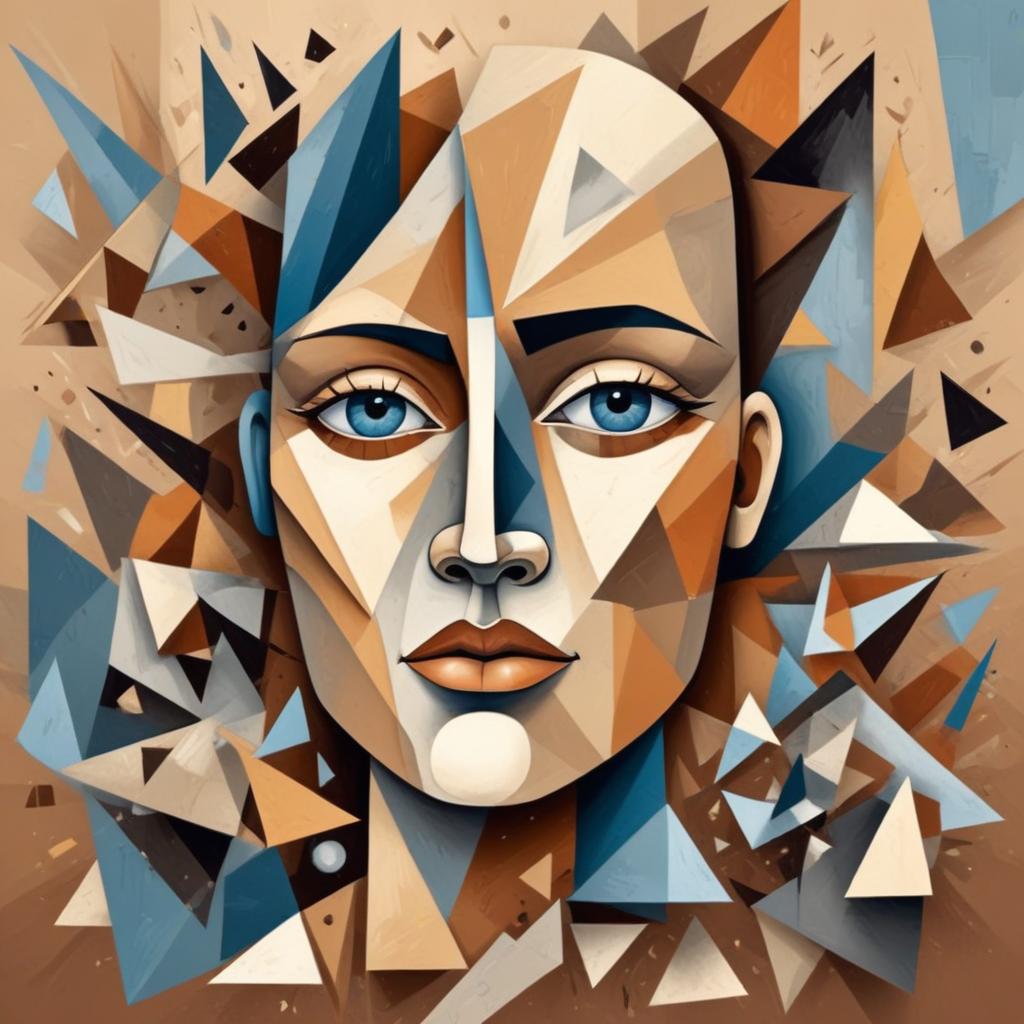
Introduction to Cubism
The Cubism movement stands as one of the most groundbreaking chapters in the history of modern art. Originating in the early 20th century, Cubism revolutionized traditional art by challenging the conventional perspectives and representations that had dominated Western art for centuries. This art movement, spearheaded by influential artists Pablo Picasso and Georges Braque, introduced a radical way of seeing the world — by breaking objects down into geometric shapes and depicting multiple viewpoints simultaneously.
The earliest phase of the Cubism overview reveals a departure from realistic portrayals toward abstract forms that emphasize structure and form over naturalistic detail. This art movement emerged in response to the rapidly changing world, where new technologies, philosophies, and scientific discoveries were reshaping society. Cubism’s significance lies in how it deconstructed subjects into fragmented forms, challenging the viewer to engage with art in an entirely new way.
This innovative approach not only altered the aesthetics of painting and sculpture but also influenced numerous other art forms and artistic disciplines. By rejecting the single viewpoint perspective, Cubism invited artists and audiences alike to consider multiple dimensions and facets of a subject simultaneously. This transformation played a key role in the evolution of modern art as a whole, laying the groundwork for abstract and avant-garde movements that followed.
Ultimately, the Cubism movement’s revolutionary impact extended beyond art to influence architecture, literature, and design. Its exploration of form, space, and perspective challenged existing norms and expanded the possibilities of artistic expression. Even today, the Cubism overview remains essential for understanding the development of contemporary art, demonstrating how this art movement reshaped the way we perceive and interpret visual reality.
Historical Background
The Cubism movement emerged during the early 20th century, a period marked by significant social and artistic shifts. This era saw rapid industrialization and urbanization, which profoundly influenced the evolution of art. Traditional perspectives and representations in art were being questioned, as artists sought new ways to depict reality. Cubism history is rooted in this transformative time, when painters like Pablo Picasso and Georges Braque began exploring fragmented forms and multiple viewpoints, breaking away from classical techniques.
Artists and intellectuals of the early 1900s were responding to changing realities, including technological advancements and shifting social structures. The artistic climate was ripe for innovation, with movements like Impressionism and Post-Impressionism paving the way for further experimentation. Cubism became a radical departure from these earlier styles by emphasizing abstracted geometric shapes and depicting objects simultaneously from various angles. This approach signaled a new evolution in art, reflecting the complexity and dynamism of modern life.
In summary, Cubism history is intertwined with the broader cultural and social transformations of the early 20th century. The movement not only redefined artistic expression but also challenged viewers to engage with art in a more analytical and multifaceted way, marking a pivotal moment in the evolution of modern art.
Founding Artists
The Cubism movement, which revolutionized modern art, was pioneered primarily by Pablo Picasso and Georges Braque. These two visionary artists reshaped the conventional approaches to form and perspective, laying the foundation for one of the most influential art movements of the 20th century. Picasso, known for his inventive and bold style, introduced fragmented perspectives and geometric shapes that challenged traditional representation. His work during this period emphasized the breakdown of objects into multiple viewpoints, allowing a more complex, abstract visual experience.
Georges Braque, on the other hand, complemented and advanced the movement by focusing on structural coherence and a muted palette that emphasized form over color. Braque’s analytical approach to Cubism involved meticulous observation and reconstruction of objects on canvas, offering a dense, textured effect that contrasted with Picasso’s more dynamic executions. Together, Picasso and Braque’s collaboration and mutual influence marked a radical departure from realism and paved the way for Cubism’s evolution.
As Cubism pioneers, both artists contributed uniquely to the movement’s signature style: fragmented planes, multiple perspectives, and an abstracted form language. Their work not only challenged artistic norms but also inspired subsequent generations of artists to explore abstraction and conceptual design. Picasso and Braque’s foundational efforts remain celebrated as the core of Cubism’s profound legacy in modern art history.
Characteristics of Cubism
The Cubism style revolutionized traditional art by breaking away from classical perspectives and embracing a new way of visual representation. Central to Cubism are its distinctive art techniques that emphasize fragmented forms, multiple perspectives, and abstract shapes, creating a unique visual experience that challenges perception and interpretation.
One of the hallmark visual elements of Cubism is the fragmentation of objects. Instead of depicting subjects as whole entities, Cubist artists break them down into a series of intersecting planes and facets. This process transforms the familiar into a complex puzzle of geometric shapes, inviting viewers to piece together the image in their own way. Fragmented forms highlight the structural components of the subject, moving beyond surface appearances to reveal deeper dimensions.
Another key characteristic is the use of multiple perspectives. Rather than representing a subject from a single fixed viewpoint, Cubist works portray several angles simultaneously. This technique captures the essence of objects as experienced in time and space, presenting a more comprehensive and dynamic understanding. By layering different viewpoints, the art transcends the limits of traditional visual representation and encourages active engagement from the audience.
Abstract shapes also play a vital role in the Cubism style. Moving away from realistic depictions, artists employ simplified and often geometric forms to convey their themes. These abstract elements emphasize form and structure over color and detail, focusing on the essence rather than the literal appearance of subjects. The integration of these shapes creates a harmonious yet intriguing composition that exemplifies the innovation at the heart of Cubism.
Together, these art techniques—fragmented forms, multiple perspectives, and abstract shapes—define the visual elements that make Cubism a groundbreaking movement in modern art. Cubist artists challenged conventional norms by deconstructing reality and reconstructing it in multidimensional ways, thus broadening the possibilities of artistic expression and influencing countless generations of artists to come.
Analytic Cubism
Analytic Cubism represents the initial phase of the Cubism movement, marked by a deep exploration into the fragmentation of objects. Artists engaged in breaking down subjects into their geometric components, presenting multiple viewpoints simultaneously to capture the essence of the form. This phase is characterized by a meticulous analysis of shapes and the reassembly of reality into abstracted, often disjointed, perspectives. The technique emphasizes structural comprehension over realistic representation, allowing the viewer to see underlying forms rather than surface appearances.
The color schemes during the analytic phase are notably restrained, predominantly utilizing a monochrome palette. Muted tones of browns, grays, and ochres dominate the canvas, focusing the observer’s attention on form and structure rather than the distraction of vibrant colors. This limited color range enhances the intellectual nature of analytic cubism, as it removes emotional color cues and encourages a more cerebral engagement with the artwork. The monochrome palette also aids in highlighting the subtle interplay of planes and facets that define this period.
Through this method of fragmentation and subdued coloration, analytic cubism challenges traditional artistic conventions by prioritizing conceptual reconstruction over visual fidelity. The approach invites viewers to actively dissect and interpret the image, revealing the complexity beneath everyday objects. Ultimately, analytic cubism laid the groundwork for subsequent developments in abstract art, pushing boundaries in how art could represent reality.
Synthetic Cubism
Synthetic Cubism marks a distinctive phase in the Cubist movement where artists shifted from the fragmented and complex depictions of objects to a more simplified and reconstructed approach. This phase is characterized by the introduction of collage elements, which brought new textures and materials into the artwork, blending painted surfaces with real-life objects such as newspaper clippings, wallpaper, and fabric. The use of collage not only challenged traditional painting techniques but also added a tangible dimension to the art.
In addition to collage, synthetic cubism is known for its use of bold colors which stand in contrast to the more muted palette of earlier Cubism. Artists employed brighter and more vivid hues to highlight and redefine shapes within the composition, making the artwork visually engaging and dynamic. This vibrant shift allowed for more expressive interpretations and a fresh visual language within the Cubist framework.
Synthetic Cubism also simplified shapes, moving away from the intricate fragmentation of forms seen in analytical Cubism. Instead, it used larger, more easily recognizable geometric shapes to construct or reconstruct the subjects. This approach emphasized clarity and structure, making the forms clearer and more accessible while still maintaining an abstract quality. The combination of collage, bold colors, and simpler shapes allowed artists to experiment with spatial relationships and the representation of reality in innovative ways, greatly influencing modern art’s development.
Legacy and Influence
The Cubism movement, born in the early 20th century, revolutionized the way artists perceived and represented reality, leaving a profound legacy and influence on the trajectory of modern art. By breaking away from traditional perspectives and embracing abstract visual languages, Cubism became a cornerstone that shaped numerous art movements legacy and continues to impact contemporary culture.
One of the most significant contributions of Cubism was its challenge to conventional representation. By deconstructing objects into geometric shapes and presenting multiple viewpoints simultaneously, Cubism expanded the possibilities of artistic expression. This approach directly influenced subsequent movements such as Futurism, Constructivism, and Abstract Expressionism, which adopted and adapted Cubist principles to explore movement, structure, and emotional intensity in new ways. The cubism influence is evident in how these movements broke further from realism toward abstraction and conceptual art.
Moreover, Cubism’s impact transcended painting and sculpture, extending into design, architecture, and even literature. Its analytical and synthetic phases inspired creative experimentation across disciplines, encouraging artists to rethink form and space. The movement’s emphasis on fragmentation and reassembly found echoes in modern graphic design and multimedia, demonstrating Cubism’s versatility and the enduring relevance of its ideas in the evolving landscape of the arts.
The modern art impact of Cubism is also reflected in the way it paved the path for conceptual and non-representational art forms, which dominate much of contemporary artistic practice. By laying the groundwork for abstract art, Cubism helped detach art from strict adherence to visual likeness, allowing for more subjective and varied interpretations. This legacy enables artists today to explore identity, perception, and narrative through innovative and multifaceted visual languages.
In summary, the legacy of Cubism is profound and far-reaching. It not only redefined artistic methods and aesthetics in its time but also left a durable imprint on the art movements legacy that followed. Its radical reconception of form, perspective, and abstraction continues to inspire and influence contemporary culture, underscoring its lasting importance in art history and reaffirming its position as a pivotal force in shaping the future directions of art worldwide.
Impact on Modern Art
The Cubism movement marked a revolutionary shift in the art world, paving the way for modernism and the emergence of abstract art in the 20th century. By breaking away from traditional perspective and representation, Cubism introduced a new approach to depicting reality, emphasizing geometric forms and multiple viewpoints. This innovative style challenged conventional aesthetics and opened up endless possibilities for artistic expression.
The influence of Cubism on modernism is profound. It laid the groundwork for subsequent art innovations and inspired artists to explore abstraction beyond the confines of realism. Cubism’s fragmented forms and simultaneous angles encouraged a more conceptual view of art, where perception and interpretation became central. This shift was critical in the evolution of abstract art, allowing artists to experiment with shapes, colors, and compositions detached from literal representation.
Moreover, Cubism’s emphasis on art innovation mirrored the broader cultural changes of the time, reflecting the rapid technological advancements and shifting social landscapes. By fostering a spirit of experimentation and breaking traditional boundaries, Cubism helped redefine what art could be, influencing countless movements such as Futurism, Constructivism, and Abstract Expressionism. Ultimately, Cubism’s legacy is its role as a catalyst that transformed the trajectory of modern art and continues to inspire artists worldwide today.
Cubism in Contemporary Culture
Cubism continues to have a profound impact on contemporary art, design influence, and popular culture, illustrating its lasting legacy beyond its early 20th-century origins. In contemporary art, Cubism’s fragmented perspectives and abstract forms inspire artists to explore new ways of representing reality, pushing boundaries in painting, sculpture, and mixed media. This movement’s emphasis on deconstruction and multiple viewpoints aligns well with modern explorations of perception and identity, making it a fertile ground for creative innovation.
In the design world, Cubism’s geometric shapes and bold compositions have influenced everything from architecture to graphic design and fashion. Designers incorporate Cubist principles to create striking visuals and functional spaces that challenge traditional aesthetics. The interplay of form and function seen in Cubist art has inspired minimalist and avant-garde movements within contemporary design, highlighting the movement’s versatility and continued relevance.
Popular culture also reflects Cubism’s influence, with its stylized approach evident in digital art, advertising, film, and even video games. The recognizable fragmented and abstract imagery derived from Cubism enriches storytelling and visual communication, capturing audiences with its dynamic and multifaceted appeal. Through these various channels, Cubism remains a vital source of inspiration, underscoring its pivotal role in shaping contemporary art, design influence, and popular culture.

I have spent years transforming my home into a personal gallery, constantly hunting for unique pieces that bring walls to life. There is nothing quite like the thrill of discovering an emerging artist online and finding the perfect artwork to complement a room. I am passionate about helping others navigate the world of digital art markets to find authentic pieces that truly resonate with their style.